


Plan an engine lease return before accepting delivery
The rental price is only one part of an engine lease. Agree the evidence, return condition and responsibility for each handover while the transaction can still be shaped.
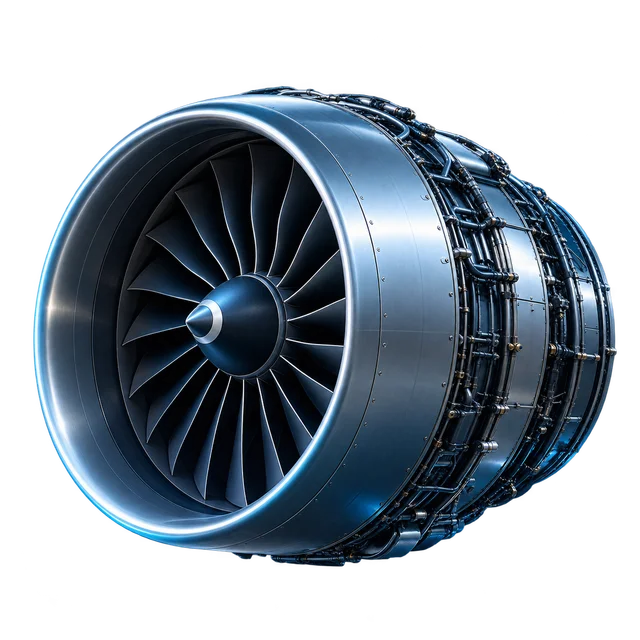
Illustrative image—not evidence of a real case or verified capability.
Agree a baseline that both parties can identify
In a hypothetical short-term lease, the airline needs an engine quickly and the lessor needs confidence in its eventual return. Begin with the exact engine identity, included modules and accessories, supplied records and delivery condition. Record what is excluded as carefully as what is included. A photograph of the engine is useful context, but not a complete inventory of the supplied configuration. Have both parties identify the same delivery baseline and any accepted discrepancies. If accessories are changed later, the transaction should still explain which items belong to whom. This makes the eventual return a comparison against an agreed statement rather than a debate based on two different memories.
Read the return conditions before the rate
IATA's aircraft-leasing programme treats delivery, redelivery and component traceability as connected areas of lease practice. Its overview is not a substitute for the actual engine agreement. For your transaction, separate permitted use, required return condition, records obligations, inspections, maintenance responsibilities and the commercial consequences of differences. Identify who decides whether a proposed maintenance action or substitution is acceptable under the agreement. Do not assume a technically approved repair automatically satisfies a lessor's contract, or that a commercial concession authorizes a technical action. Where a clause is unclear, obtain the responsible legal and technical interpretation before acceptance. A concise question register is more useful than a long unchecked attachment list.
Define clocks as contractual events
Lease duration, usage charges and late-return exposure may depend on different events. Identify the agreed start and stop for each rather than assuming dispatch, receipt, installation and acceptance are interchangeable. Preserve timestamps, the source timezone and the evidence for the event. Where hours or cycles affect charges, state who supplies the usage statement, which period it covers and how discrepancies are handled. Never invent a conversion between flight time and chargeable time. If a return is delayed by missing paperwork, the agreement may treat that differently from transport delay; the software should show the unresolved question rather than choose a financial answer. Keep invoice calculations reviewable against the actual agreed terms.
Maintain the return file during use
A return pack assembled only at the end competes with transport preparation and maintenance deadlines. Build it progressively from the accepted baseline: usage statements, relevant work, removals, replacements, reported events and correspondence that changes the agreement. Link each entry to the engine or affected accessory rather than placing everything in an unstructured folder. Distinguish original evidence from an internal summary. If an unexpected event occurs, preserve the factual report and follow the required technical and contractual notification process; do not invent a universal incident-clearance declaration. Limit access to the parties and roles that need it. A public sourcing card should never expose the operational history or private commercial agreement.
Keep return, receipt and settlement distinct
At redelivery, record the dispatch statement, custody handover and receiver's findings separately. A carrier's receipt can establish a transport event without confirming that the lessor accepted the engine and records. List open differences with an owner, evidence request and next decision. Commercial staff may agree a remedy while technical staff assess the actual condition; preserve both decisions without allowing one to impersonate the other. If a claim remains after physical return, show it as an open claim linked to a completed movement. This is clearer than keeping the engine indefinitely in transit or marking the whole lease closed while the parties still disagree about important obligations.
Rehearse one late document before the first lease
Use a synthetic engine transaction to test one ordinary return and one missing-document exception. Ask each party to identify the baseline, usage period, next action and unsettled obligations from its own view. Check that the owner, operator and maintenance custodian remain distinguishable when the engine moves. The exercise should expose ambiguous agreement terms early, not simulate a legal conclusion or maintenance release. A sound coordination record lets both parties reconstruct what was offered, accepted, moved and questioned. The actual lease still requires appropriate legal review, technical acceptance, transport arrangements and authorized decisions. A polished workspace cannot guarantee that an engine or its records meet every return condition.
Sources & scope
This is editorial educational analysis. Licensed manuals are not reproduced; Iranian applicability and independent technical approval are not established. Actual operations require current controlled sources and authorized decisions.
Continue with the Library tools
Related reading
On this page
Test the idea, not just your memory
Short learning scenarios with explained answers—not a qualification test, training certificate or operational decision.